And the Voice Said?

Forty years later, and I still hear that High School boy’s comment. 

“You’re ugly!” 

His words shocked me as though he’d thrown iced water in my face. I didn’t know his name. We weren’t classmates. I didn’t bump into him as we passed each other in the hallway. What motivated his cruel words?

Speechless, I escaped into the girl’s restroom and looked in the mirror. My fifteen-year-old image stared back at me. Straight dish-water blond hair. Pimples on my chin. Metal braces on my teeth.

“I am ugly!”

I grabbed the gold tube of lipstick in my purse (the only make-up I wore at that age) and colored my lips pink, hoping I’d appear less ugly. But lipstick couldn’t salvage my wounded self esteem.

I never encountered that boy again, but his two words stayed with me. Such is the power of words regardless of the children’s rhyme: “Sticks and stones may break my bones, but words can’t harm me.”

Words hurt especially if we believe they’re true. Even thoughtless words . . . that we know aren’t true . . . feel like nettles in the heart. But there’s a way to hush the voices when we can’t erase the words.

Replace them with God’s truth and His love-filled promises.

  • I formed you.
  • I redeemed you.
  • I have called you by name. 
  • I am with you. 
  • You are Mine. 
  • You are precious in my sight.  
  • You are loved. 

The Lord spoke these words to the Israelites—despite their tendency to rebel and ignore Him. (Isaiah 43) But God’s love wasn’t reserved for them alone. Search Scripture and you’ll find His love for each of us is equally endearing. 

I couldn’t always say that. I had to learn there’s a difference between knowing God loves me and believing God loves me—pimples and all. What about you?

Do you believe you’re precious in God’s sight?

Do you believe God loves you so much that He sent His Son Jesus to redeem you?

Do you believe He loves you with an everlasting love?

If not, why not?

Perhaps you’re struggling like I once did. You want to believe God, but your inner critic and those negative voices sound too convincing: 

“God doesn’t love you.”

“You’re not worthy.”

“You messed up big time—no forgiveness for you.” 

Oh precious reader, which voice has authority in your mind?

My mentor, Loretta, once told me, “If you only look for God’s judgment and wrath in the Bible, you’ll find it. Look for God’s characteristics and actions that reveal His love. Draw a heart next to those verses as a reminder.”

I followed her advice. As I read Scripture through love-tinted lens, the depth of God’s love amazed and humbled me. Now my Bible resembles a Valentine’s card similar to those pastel heart-shaped candies imprinted with the words: 

I Love You. Be Mine.  Forever Yours.

As for that teenager who called me ugly, I hope he believes in the Lord and has experienced His love too!

“God showed how much he loved us by sending his one and only Son into the world so that we might have eternal life through him. This is real love—not that we loved God, but that he loved us and sent his Son as a sacrifice to take away our sins” (1 John 4:9-10).

Photo: Jennifer Wrede

Candy photo: Getty Image

Happy & Hurting People Need Others


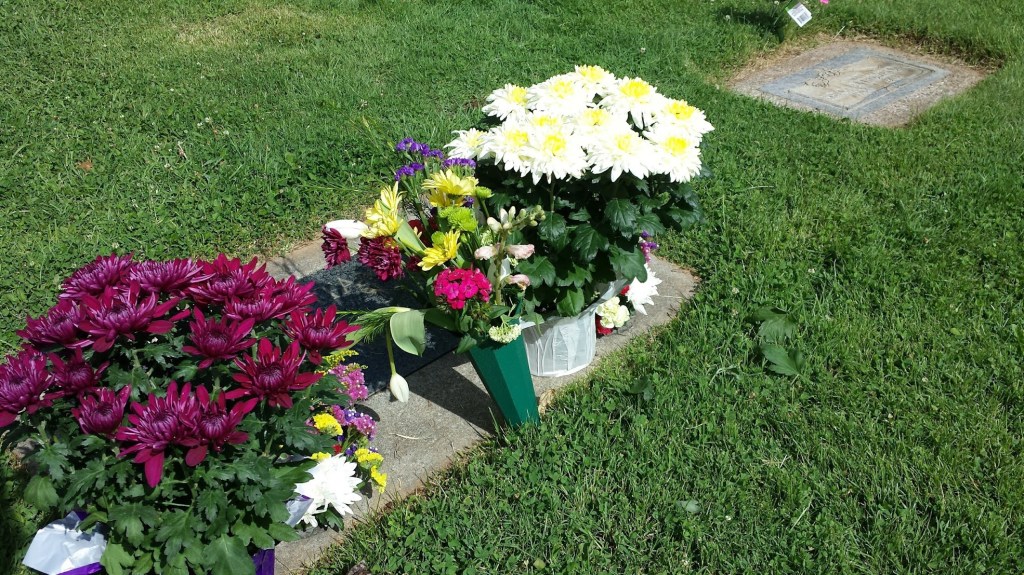
What comes to mind that made you rejoice this past year? Perhaps you’re mourning the death of a loved one. Or maybe, someone else‘s situation caused you to enter into their joy and grief.

I can’t remember a year when I’ve rejoiced and mourned with so many people.

Rejoice with those who rejoice.

Last June, my son and his bride gazed into each others’ eyes as they pledged to love one another for the rest of their lives. I squeezed my husband’s hand, remembering our own wedding vows spoken forty-two years earlier. After the celebration festivities, the guests cheered as the newly-wed couple drove away. Our hearts were full. Party over!

Later that evening, I sat alone with my sister-in-law and watched her tears flow. While she tried to rejoice over my son’s marriage, her heart ached for her parents who’d died a few months earlier within weeks of each other. I listened and empathized. But I couldn’t begin to ease her pain that goes on and on.

That day of emotional highs and lows is how my year played out. I’d celebrate and send notes of congratulations for new-born babies and milestones like a 90th birthday. But, I mailed far more condolence cards.

“Rejoice with those who rejoice and mourn with those who mourn,” (Romans 12:15) reminds me that life isn’t all about me and mine. There’s a heap of happy and hurting people out there. We’re not meant to do life alone.

Weddings, births, illness, funerals call for community, charity, and compassion.

We gather as a community to cheer and encourage; empathize and support. 

We give flowers, meals, cards, gifts, acts of kindness to show we care about another person’s well being and what’s happening in their life. 

The difference between rejoicing and mourning lies in the effort and forethought it takes to enter into someone else’s happiness and sorrow. 

When we rejoice with those who rejoice, we know what to expect. We know our part. We show up. We laugh. We give gifts and words of affirmation. The moment is fleeting.

When we mourn with those who mourn, we’re often caught off guard. We sympathize (feel pity and sorrow) so we send a text or card with the familiar words, “So sorry.” “Thoughts and prayers are with you.” Empathy (being in the mourner’s shoes) prompts us to go the extra mile. Send flowers or a meal, make a donation in the deceased person’s memory. Attend a memorial.

“Mourn with those who mourn.”

Unlike rejoicing, grief has no timetable. People grieve differently. I try to be sensitive and reach out on a regular basis to see how the person is doing even when the individual appears to be “fine.” Even so, I wonder: Did I do enough? Does the person realize how much I care? Would they rather I leave them alone or behave like life is normal?

I reached the conclusion “mourning with those who mourn” is more about my attitude than a prescribed set of actions. When I love someone who’s grieving, I’m naturally inclined to make myself available. My heart’s desire is to ask the person how I can help and pray for them. I follow through!

Ultimately, only the God of all comfort—who sees and hears our cries—can wipe away a person’s tears and minister to their hearts.

His job’s too big for me. So I pray for these grief-stricken dear ones when they come to mind. I ask the Lord to use their sorrow to draw them closer to Himself. And By His grace, show them a reason to rejoice even in this…

How do you mourn with those who mourn? 

What did you find beneficial when others mourned with you?

Photos: mine

When There Seems No Way

Have you felt stuck? I don’t mean stuck on a crossword problem. I’m talking at your wit’s end (overwhelmed and not sure how to proceed) because you’re…

Stuck in a rut, wheels spinning. 

Stuck in a tunnel, no end in sight.

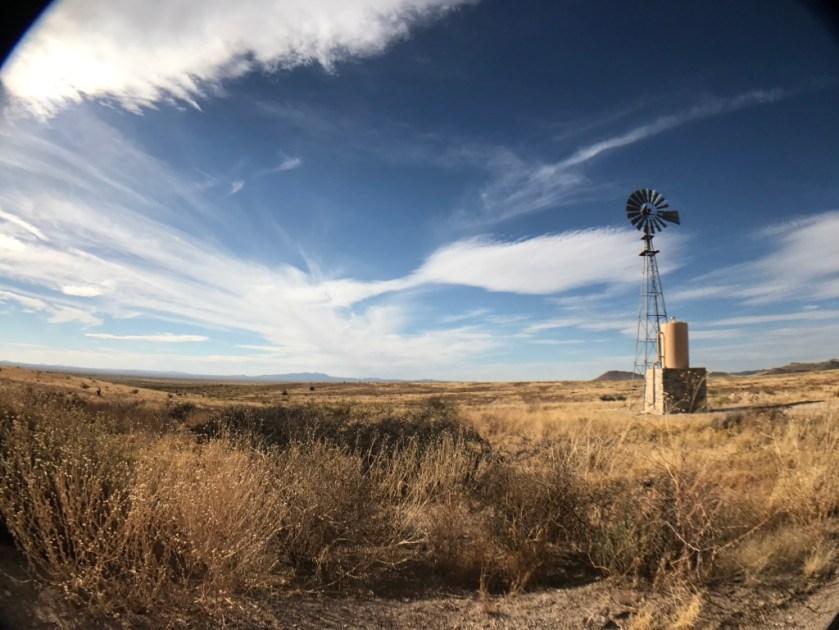
Stuck in a wilderness, longing for green pastures.

Stuck in a spiritual dry spell, waiting for God to drench your spirit. 

Stuck with the consequences of poor decisions. 

I’ve been bogged down with all the above at some point. But lately, I’m stuck for words!

Perhaps you’ve been there. Searching for words to encourage someone who’s stuck in a barren land.

Words seem inadequate. So there are no words.

What can I say to the sister-in-law who mourns the death of her parents? The friend who lives with chronic pain. The dad hospitalized with COVID. Grown children crippled by anxiety. The young man looking for a job. The mom about to give birth after losing a premature child last year. Not one, but two recent widows, who ache for their husbands. Need I go on?

Sometimes I don’t know how to pray for these dear people. That’s when I rely on “the Spirit to intercede for me with groans that words cannot express” (Romans 8: 26). 

Shutting my mouth and listening to someone who’s hurting often speaks louder than words. Besides, how can I share a timely word that lifts someone’s spirit without sounding trite? Fear of saying (or writing) the wrong thing kept me stuck for words until God’s Word reminded me.

When there are no words—there’s God.

God is TRUTH!

God’s Word is TRUTH!

Must we walk in someone’s shoes before we share the balm of truth? Scripture reveals God’s character by His actions. “Fear not. When you pass through the waters, I will be with you.”

Not if, but when we go through difficult times—God is with us. Why would we not want to share God’s goodness and mercy with someone whose hurting?

God makes a way when there seems no way.

Doubts, anger, grief, loneliness, pain, fear will try to convince us we’re stuck. There’s no way out of this situation . . . this heartache. But our feelings can’t eliminate facts. 

“Behold, I’m about to do something new. See, I have already begun! Do you not see it? I will make a pathway through the wilderness. I will create rivers in the dry wasteland” (Isaiah 43:19).

When the way seems impossible, God makes a way . . . even in this.

Photos by Jennifer Wrede

Do You Trust God’s Love?

I used to sing Jesus Loves Me when I was a skinny girl with pigtails. But, just because I knew the Bible said, “He loves me,” didn’t make me feel secure in His love.

 Surely, I had to be a good girl to earn God’s love.

Surely, my bad behavior would make God love me less.

Even when I became an adult, and had glimpses of God’s perfect love for me, I couldn’t keep my heart in that place.

 The subject came up when I had Lunch with Loretta. It’s been years since our conversation, but here’s an excerpt when I asked her if she struggled to believe God loved her.   

“I struggle with many things,” she said, “but knowing God loves me isn’t one of them. I can’t explain it. I only know God loves me today as much as He did yesterday.”

I looked into Loretta’s calm eyes. “I wish I had your confidence, but it’s hard to believe His love for me doesn’t vary from day to day.”

“Are you saying you think God loves you less when you do something bad?”

I shrugged. “Doesn’t have to be bad. Sometimes, it’s what I don’t do. I skipped my morning prayers last week. So it seems like God would love me less than He did two weeks ago when I prayed every morning, and made dinner for a sick friend.”

Loretta raised her brows. “I’m thankful God’s love doesn’t depend on our actions or we’d all be in a fix.”

“I know in my head that God loves me,” I groaned. “But sometimes, I can’t get my heart to believe it.”

“Karen, if you want to rest in God’s love, it begins with trusting God when He says, ‘I love you.’

“But I agree that God’s love for us is so much more complete and purer than we can possibly understand.” Loretta pointed to a framed photo of her family. “I think the closest human experience we have to show God’s love is giving birth. Remember when your children were born? You loved them, right?”

“More than I’d ever thought possible,” I replied. 

“And yet, they’d done nothing to earn your love except to be present.”

“True.” I thought of Jonathan, my first-born. I remembered sitting in the hospital bed studying his sweet face. As I did, an unexplainable, consuming love for him filled every fiber of my being. Nothing Jonathan did—or didn’t do—had ever kept me from loving him. Oh yes, this was the love of God. I needed to see myself this way, a babe in God’s arms with His deep love pouring out on me.

Edited in Prisma app with Gothic

“Karen, do you want to know for certain that God’s love for you is eternal and unwavering?”

“Absolutely.” 

“Then you must know His character. When I was in my forties, I searched God’s Word to learn about His character . . . who He was, along with how and why He interacted with His people.

“Every time I read my Bible I drew a heart near every action that showed God’s character—like pursuing. If you only look for God’s judgement and wrath in the Bible, you’ll find it. But as I marked His actions, what stood out was how forgiving and merciful He was to such disobedient children because He loved them. Now, when I open my Bible, I see those hearts littered in the margins and I’m reminded who God is.”

“You could also draw hearts around descriptive words,” I said. “Like patient and faithful.”

Loretta nodded. “Just remember. It’s not enough to highlight God’s characteristics. We have to believe they’re true. Otherwise we won’t trust God’s love when we’re going through tough times. Or when we fail.”

I took Loretta’s advice. I drew tiny hearts next to God’s characteristics and actions that revealed His love. As I read Scripture through love-tinted lenses, God’s love seemed wider and deeper. Today, my Bible has so many tiny hearts, it resembles a Valentine’s card. 

And when I mess up and fail to be a “good girl,” I’m able to rest, knowing God loves me even in this  . . . 

Do you struggle to believe God loves you?

According to Romans 8: 38-39, what can separate you from God’s love?  

Mom/Child Photo: Jennifer Wrede

Image by James Chan from Pixabay

Does Compassion Move Us?

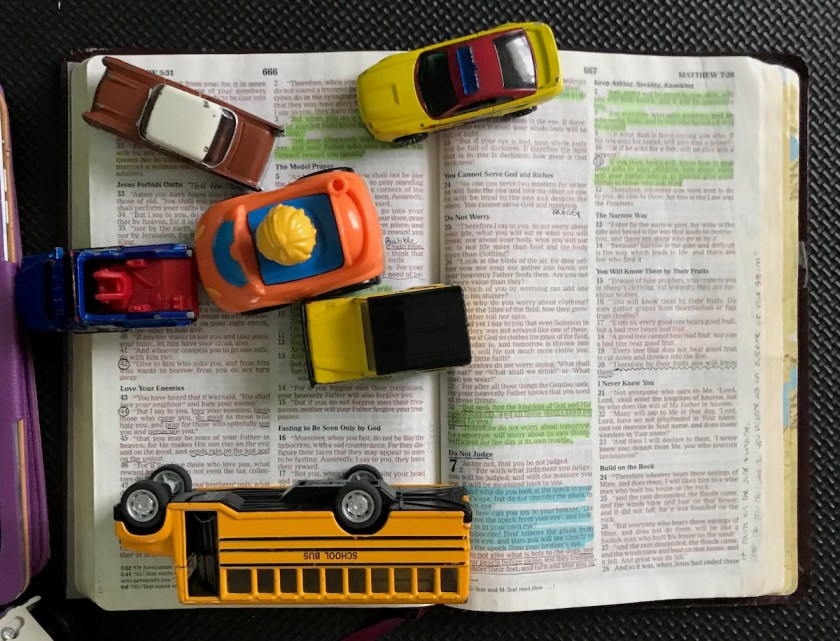
Determined to read my Bible, I sit on the couch and breath a prayer while my two-year-old son plays with his matchbox cars.

“Lord, help me focus on Your Word. Teach me to be more Christlike.”

Aware that my child can interrupt me at any second, I scan Matthew 15:29-31. Tons of people came to Jesus,  bringing the paraplegic, the blind, the maimed, the mutes…all kinds of needy people . . . and threw them at Jesus’ feet to see what He would do.

He healed them. 

Then, Jesus noticed the people were hungry. He took seven loaves of bread, a few fish, and fed four thousand . . . .

Plop!

My son grins as he parks his cars on top of Matthew. I point to the coffee table. “Drive your cars there so Mommy can read.”

He looks at the coffee table, noting his blue plastic cup. He lifts it to his lips. The cup is empty. He hands it to me. 

“Are you thirsty?”

He nods. 

I set my open Bible (now a parking lot) on the coffee table, and groan as I walk to the kitchen. 

“Sorry, Lord, duty calls.”

Irritation flows through me as I fill my son’s cup with cool water. 

I don’t need to read Scripture to realize I’m impatient and far from Christlike. My child has made it apparent without saying a word. 

I return to the couch and lift my son on my lap. He leans against my shoulder while he sips water. But my mind is fixed on those people who’d traveled to see Jesus.

I picture them as curious folks who wanted to meet this man who did the impossible with just a word, a touch. Cautious folks, hesitant to intrude on Jesus. Quietly waiting their turn. 

But what if—instead of being calm and orderly—the people were a noisy, dirty, smelly, diseased, ragtag sea of humanity clamoring for Jesus’ attention?

Matthew says the people were hungry which means they were probably hangry. Surely there were crying babies and fussy toddlers in that hangry crowd as their family pressed forward—elbowing, squeezing, shoving, stepping on people’s toes. Fearful Jesus would leave before they received help.

How could Jesus be so patient? How could He keep on giving?

And yet, were those desperate people any different than today’s refugees who flee their homes to escape violence and persecution. The images of parents carrying their children to safety are gut-wrenching. I’m filled with compassion but, unlike Christ, I’m seldom moved to act on their behalf.

(Photo by Kevin Frayer/Getty Images)

Jesus embodied compassion. Instead of seeing a crowd, He saw individuals and His empathetic heart suffered to see their pain. 

His gut-wrenching compassion moved Him. 

To heal bodies. 

Fill empty stomachs.

Redeem souls.

 Change lives.

I run my fingers through my son’s blond curls, grateful that we’re healthy, safe, and fed. Even so, I still need Jesus. 

I’m moved to tears because I know that my compassion for others has limits. Only Christ’s love flowing through me can move me to step out of my comfort zone and act.

And yet, even when I’m impatient by the smallest interruptions, His compassion moves Him to act.

Even in this . . . harried mom’s heart. 

Share how compassion moved you to act on someone’s behalf.

Photo of Cars: Jennifer Wrede

Blog: Collaborative work: Jennifer Wrede, Karen Foster